


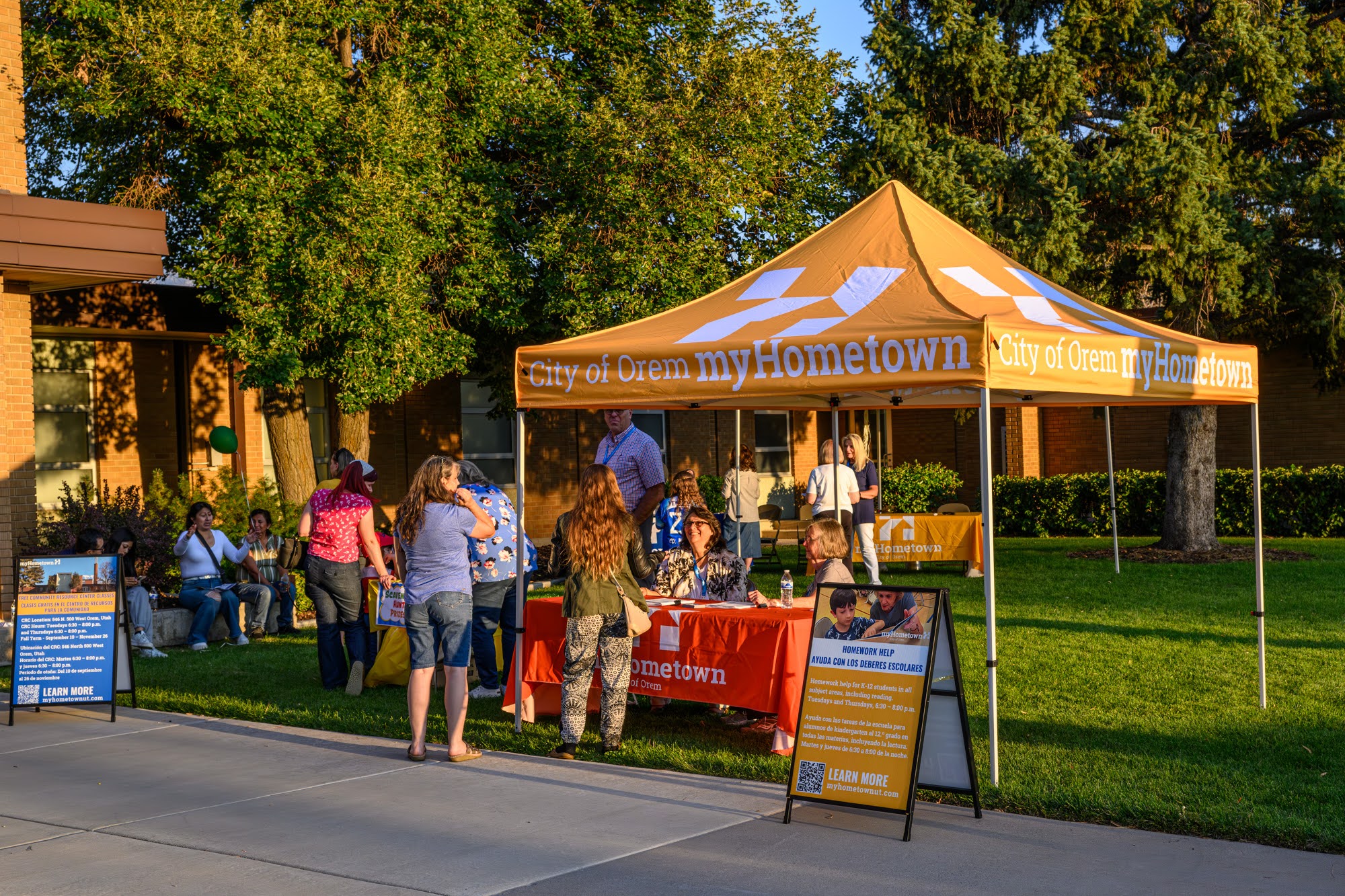
What Happens on a Tuesday Night Across the Wasatch Front
The building belongs to a congregation. On Sunday mornings it is filled with worshippers. But on Tuesday nights, it belongs to the neighborhood.
By six o’clock the parking lot is filling up. Inside, a room that was quiet an hour ago is now occupied by a dozen women sitting around folding tables, practicing English with volunteers who showed up because someone asked them to and they said yes. In the next room, a group of parents is working through a workshop on household budgeting. Down the hall, a crew of volunteers is sorting supplies for Saturday’s service project. Somewhere in the back, a man who has never touched a piano before is touching one for the first time, guided by a neighbor who has played for forty years and wanted somewhere to put that.
This is happening tonight in West Valley City. And in Ogden. And in Salt Lake City, Provo, Orem, Layton, and Santaquin.
Nobody is in charge in the way you’d expect. That’s the point.
This is myHometown.
It is a network of neighborhood hubs stretching the full length of the Wasatch Front — from Ogden in the north to Santaquin in the south, through Salt Lake City, West Valley City, Layton, Provo, and Orem. Seven cities. Seventeen ZIP codes. Communities that are different from one another in important ways — different languages, different demographics, different histories — but share the same basic need: neighbors who know each other, and institutions that help them show up for one another.
Each hub is rooted in its specific community, shaped by what that community actually needs, and powered almost entirely by the people who live there.
The model works because of an unusual partnership. The Church of Jesus Christ of Latter-day Saints provides buildings, utilities, and a deep reservoir of volunteers. Cities provide coordination — the tools, the data, the civic infrastructure that helps neighbors find one another. Cities Strong Foundation provides funding, materials, and the connective tissue that keeps the whole system working together. And block captains — ordinary residents who know their streets and their neighbors — organize the work from the ground up.
No single institution could do this alone. That’s not a limitation. It’s the design.
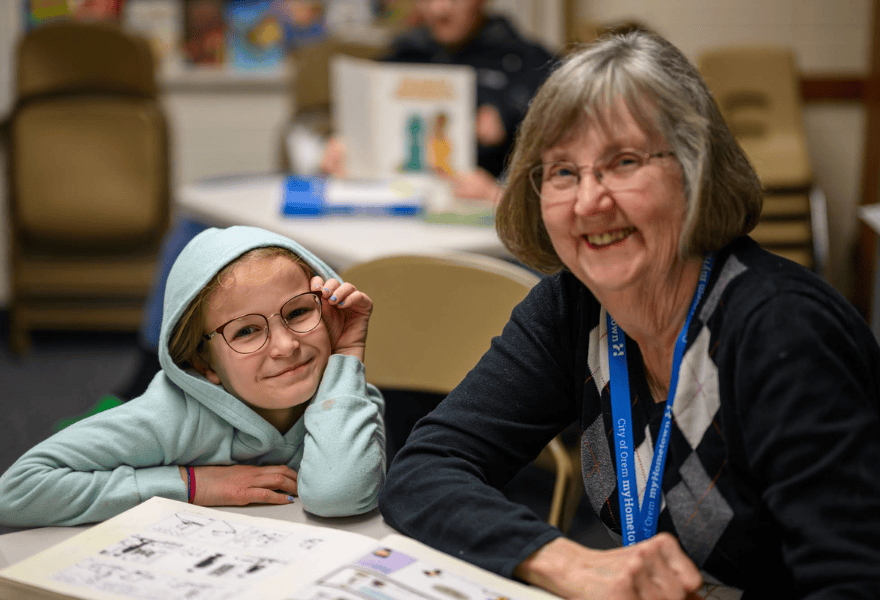

What happens inside these hubs is deliberately practical — and entirely free to anyone who walks through the door.
Every week, across the network, neighbors can show up for English as a second language classes, computer literacy, financial management, children’s literacy and life skills, mental health programs, art in its various forms, fitness and sport, and music lessons — piano, ukulele, whatever a volunteer happens to know and wants to teach.
That last one matters more than it might sound. A ukulele lesson is not, on its face, a poverty intervention. But it is an occasion. It is a reason to leave the apartment, to sit next to someone you don’t know, to discover that the person across the room has something to offer and so do you. The research on upward mobility points insistently at exactly this — at the relationships that form across difference, in ordinary moments, over time.
A Tuesday night class is where that starts.
And it costs nothing. Not to the family, not to the student, not to the person who just wants to learn to read music for the first time at sixty-three. That is not incidental. It is the whole idea.
In 2024, the myHometown network delivered more than 200,000 hours of service through 19,000 volunteers and completed 671 neighborhood projects across these seven cities.
Those numbers are real. But what accumulates beneath them — week after week, class after class, neighbor after neighbor — is trust. Relationships that cross the lines of language, income, and background that usually keep people from knowing each other at all.
From Ogden to Santaquin, myHometown is how Cities Strong Foundation builds connected communities. One Tuesday night at a time.